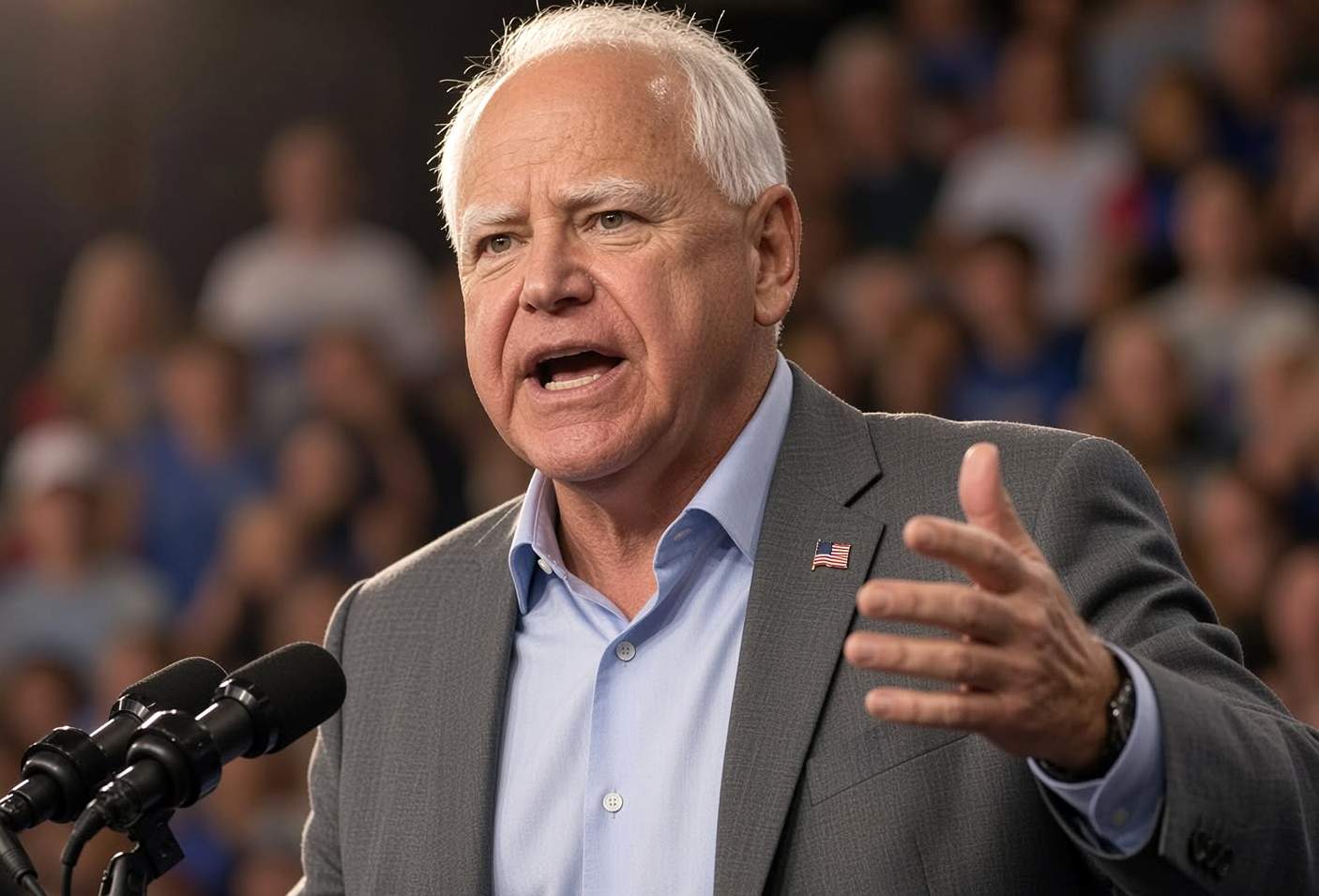
Walz has argued that Americans should be able to disagree strongly without treating political opponents as enemies. In a 2026 interview, he said he wanted to challenge the idea that disagreement should become hatred and stressed that criticism of Trump should not automatically be directed at Trump’s supporters.
That appeal for civility has also become part of a broader debate over Walz’s own political record. Republican critics have pointed to his handling of the 2020 Minneapolis unrest, his administration’s policies involving transgender students and gender-affirming care, and continuing questions about public safety and government oversight.
The record is more complicated than either side’s political messaging suggests. Official reviews documented serious problems during the 2020 unrest, while state records also show that Walz eventually mobilized the National Guard and additional law enforcement resources. His administration has also openly promoted policies protecting transgender people and expanding access to gender-affirming care.
Walz’s Message About Political Respect
Walz has spent much of the past year discussing the increasingly hostile political environment in Minnesota and around the country.
In an interview about political divisions, he said Americans should be able to argue over government policy without turning those disagreements into personal hatred. He specifically distinguished criticism of Trump from attacks on people who support the president.
That position represents a shift in tone from some of Walz’s earlier national political appearances.
In 2025, for example, Walz told Democrats that they might need to be “a little meaner” and more forceful in opposing Trump. He described Trump in highly critical terms and encouraged Democrats to push back aggressively against the administration.
Following the 2025 killing of Minnesota state Rep. Melissa Hortman and her husband, however, Walz publicly called for a reduction in political hostility. The change prompted some Republicans to argue that his later calls for civility should be considered alongside his earlier rhetoric.
The 2020 Minneapolis Unrest Remains a Major Part of His Record
One of the most significant controversies surrounding Walz’s governorship is his administration’s response to the unrest that followed George Floyd’s killing in Minneapolis in May 2020.
The unrest included peaceful demonstrations as well as arson, looting and extensive property damage. Minneapolis experienced widespread fires and destruction, and state officials eventually deployed the National Guard and additional law enforcement resources.
Walz’s administration has acknowledged that the response faced serious difficulties.
An independent review of Minnesota’s response to the May 26 through June 7, 2020, civil unrest documented the rapid escalation of events and the strain placed on law enforcement. The review’s timeline shows Walz declaring a state of emergency, mobilizing the National Guard and directing state resources as the situation developed.
A separate Minnesota legislative review was sharply critical of the administration’s preparation and response. The report said officials had received warnings about the scale of the unrest and concluded that the administration underestimated the size and potential destruction of the crowds.
Walz himself acknowledged problems with the state’s planning at the time. He said there were “holes in planning” and later said he had underestimated the scale of the destruction.
The State Eventually Mobilized Large Law Enforcement Resources
The record also shows that the state response was not limited to the early failures identified by critics.
Walz declared a peacetime emergency and mobilized the Minnesota National Guard during the unrest. His administration also directed roughly 150 Minnesota State Patrol troopers to assist Minneapolis police with dispersing crowds, preventing looting and making arrests.
Another executive order authorized the state to coordinate additional firefighting, police and health assistance from other jurisdictions.
Those actions are important context when evaluating the criticism that Walz simply allowed the unrest to continue. The official record shows both significant shortcomings in the initial response and substantial state intervention as the crisis escalated.
Walz also sought federal disaster assistance after the unrest caused extensive damage. Minnesota’s request for federal aid was initially denied, and the governor appealed that decision.
Gender Policy Has Been Another Major Point of Political Conflict
Republican criticism of Walz has also focused on his administration’s policies concerning gender identity and transgender Minnesotans.
Those policies are not merely campaign rhetoric. Minnesota statutes and executive actions establish specific protections involving sexual orientation, gender identity and gender expression.
In 2023, Walz signed legislation protecting access to gender-affirming health care and banning conversion therapy. He also issued an executive order directing state agencies to protect access to gender-affirming health care for people in Minnesota.
The governor’s administration describes those policies as protections for individual rights and LGBTQ residents. Republican opponents have argued that some of the policies go too far, particularly when they affect schools, minors or public institutions.
The disagreement is therefore fundamentally about policy rather than whether Minnesota adopted such protections. State records clearly document that Walz made them a significant part of his administration’s agenda.
Schools and Gender Identity
Minnesota’s education policies have also addressed gender identity and expression.
State law already prohibits bullying and other prohibited conduct based on characteristics including sexual orientation and gender identity. In 2024, legislation was introduced that would have required schools to adopt written gender-inclusion policies covering areas such as names, pronouns, extracurricular participation and access to facilities.
These policies have become a recurring political dividing line.
Supporters argue that schools should protect transgender students from discrimination and ensure equal access to educational opportunities. Opponents argue that schools should not make decisions involving gender identity without stronger parental involvement or different safeguards.
Calling the policies “radical,” however, is a political characterization rather than a description contained in the underlying statutes. The concrete issue is what the policies require and how schools implement them.
Public Safety Is Another Area of Debate
Walz’s public safety record has also drawn competing interpretations.
His administration points to investments in law enforcement and public safety, including $300 million allocated for public safety needs and construction of a centralized Minnesota State Patrol headquarters. The administration has also supported gun-control measures, including expanded background checks and a red-flag law.
Critics have focused instead on crime, the 2020 unrest and broader concerns about whether Minnesota’s government has responded effectively to public safety problems.
Those arguments involve different measurements of government performance. Spending on police and public safety can be documented, as can major incidents and crime statistics, but determining whether a governor’s overall record constitutes success or failure requires judgments about causes, responsibilities and outcomes.
The Debate Over Walz’s Leadership
The criticism of Walz ultimately comes down to competing interpretations of his leadership.
Republicans have argued that the unrest, crime concerns and progressive social policies demonstrate a pattern of poor governance. Democrats and the Walz administration point to legislation and spending involving education, infrastructure, public safety, health care and individual rights as evidence of an active policy agenda.
Both descriptions contain elements that can be checked against the public record, but neither by itself provides a complete assessment of his tenure.
For example, the 2020 unrest clearly exposed failures in planning and coordination. It is also documented that the state eventually mobilized thousands of personnel and significant resources to restore order.
Similarly, Walz’s support for transgender protections is an established part of his administration’s record. Whether those policies are appropriate is a political judgment, not a factual question.
Walz’s Earlier Rhetoric Complicates the Civility Message
Walz’s recent emphasis on political civility is also being viewed through the lens of his earlier rhetoric.
In 2025, he told Democrats that it might be necessary to become “a little meaner” in confronting Trump. He also used unusually harsh language when criticizing the president and his administration.
After political violence struck Minnesota later that year, Walz adopted a different message. He warned against demeaning opponents and argued that political disagreement should not become hatred.
That change does not necessarily mean the governor abandoned his policy disagreements with Trump. Instead, Walz has tried to draw a distinction between aggressive political opposition and personal hostility toward ordinary voters.
That distinction is significant in an increasingly polarized political environment, where politicians frequently criticize not only opposing policies but also the motives and character of the people who support them.
Trump and Walz Have a Long-Running Political Conflict
The relationship between Trump and Walz has been especially contentious since the 2024 presidential campaign.
Walz was the Democratic vice-presidential nominee alongside Kamala Harris, while Trump ultimately returned to the White House after defeating the Democratic ticket.
Trump has continued to criticize Walz after the election, including attacking his handling of Minnesota and accusing the governor of failing to address problems in the state.
Walz, in turn, has remained a vocal critic of Trump’s policies, particularly immigration enforcement and federal actions affecting Minnesota.
The conflict has extended beyond personal political disagreement into disputes over federal and state authority, law enforcement and immigration policy.
What the Record Shows
A factual review of Walz’s record produces several clear points.
- Walz was governor during the 2020 Minneapolis unrest and faced significant criticism over the state’s initial response.
- Minnesota’s official reviews documented planning and coordination problems during that period.
- Walz ultimately declared an emergency and mobilized the National Guard and additional state law enforcement resources.
- His administration made protections for transgender Minnesotans and access to gender-affirming care major policy priorities.
- Minnesota law includes protections against discrimination and bullying based on gender identity and sexual orientation.
- The Walz administration has also highlighted significant investments in public safety and law enforcement.
- Walz has used sharply critical language against Trump and Republicans while also calling for greater political civility.
These facts provide a more complete picture than a simple description of the governor as either a successful leader or an incompetent one.
What Remains a Matter of Political Judgment
Whether Walz’s handling of Minnesota’s 2020 unrest amounted to a leadership failure is ultimately a political assessment. The documented problems in the state’s response provide material for that criticism, but the record also includes later emergency actions and a broader law enforcement response.
The same distinction applies to his social policies. Minnesota clearly adopted protections for transgender people under Walz, but describing those policies as either necessary protections or excessive government intervention depends on political and social values.
Likewise, spending on public safety can be measured, but whether those investments produced satisfactory results is a broader question that requires examining crime data, enforcement activity and other factors over time.
The Larger Issue Is Political Polarization
The argument over Walz reflects a larger problem in American politics: elected officials increasingly face pressure to speak to their own supporters in confrontational language while simultaneously calling for less hostility across the political divide.
Walz is not the only politician whose rhetoric has changed depending on the political moment. Trump and politicians from both parties have frequently used aggressive language against opponents, while also warning about political violence and urging supporters to remain engaged through democratic institutions.
For voters, separating rhetoric from the underlying record can make these debates easier to understand.
The most concrete questions concern what an administration actually did, what problems occurred, what policies were enacted and what measurable results followed. Political labels can describe how supporters and opponents interpret those facts, but they do not replace the facts themselves.
Where the Debate Stands
Walz continues to defend his administration’s record while presenting himself as a critic of political hatred and division. Republicans continue to point to Minnesota’s experience with unrest, public safety challenges and progressive social policies as evidence for their broader criticism of Democratic governance.
The available record supports elements of both sides’ factual arguments while leaving the ultimate evaluation to voters.
What is not in dispute is that Walz’s tenure has included major political conflicts over public safety, education, gender policy, federal-state relations and political rhetoric. Those issues are likely to remain part of the discussion surrounding Minnesota politics as the state approaches another election cycle.
The debate over respect, meanwhile, is unlikely to be resolved by rhetoric alone. Walz’s supporters and critics will continue to interpret his record differently, but the underlying events, laws and government actions provide a factual basis for evaluating those competing claims.