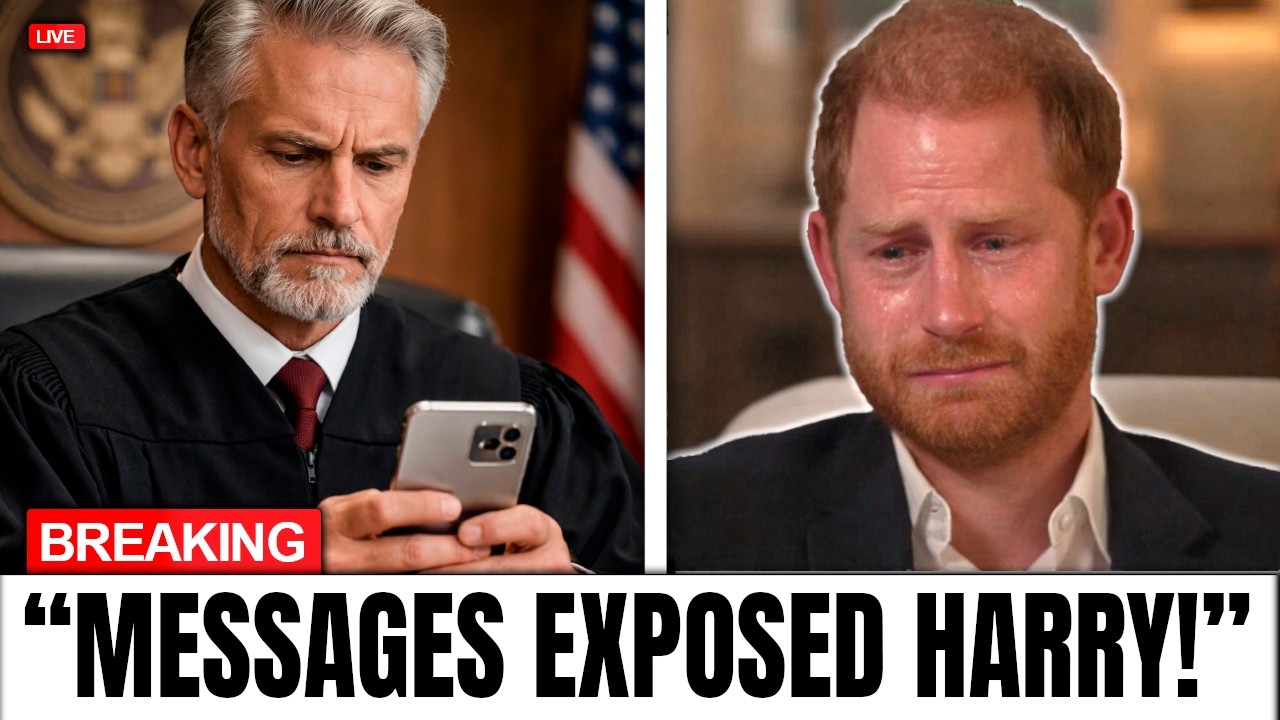
The heavy oak doors of Courtroom 13 at the Royal Courts of Justice in London were said to have swung shut on an extraordinary scene that has since ignited widespread commentary across the international media landscape. According to a detailed investigative video segment currently circulating online, the proceedings unfolded on an alleged date of 20 February 2026 before a presiding magistrate identified as Judge Margaret Thornberry.
The commentary describes an intense courtroom drama in which Prince Harry, the Duke of Sussex, sat in the witness box during a critical phase of his long-running legal crusade against British press institutions. As the segment narrates, the courtroom atmosphere transformed from clinical legal deliberation into raw human tragedy when opposing counsel reportedly introduced a sheath of confidential digital correspondence.
These leaked text archives were purportedly authored by Meghan Markle, the Duchess of Sussex, and addressed to an unnamed California confidante designated under the legal pseudonym Witness X. The narrator alleges that Judge Thornberry adjusted her spectacles and read aloud eleven clinical words from an evidentiary binder that would allegedly dismantle the Sussexes’ carefully curated public narrative: “Make him tear up when discussing Diana, it plays well.”
Upon hearing the recitation of the alleged message, Prince Harry reportedly curled his hands into bloodless fists before lowering his head and weeping openly from the witness stand. The commentary claims that hardened court reporters, who were accustomed to covering grave criminal proceedings, ceased typing as the Duke broke down in unfiltered distress.
In online discussion forums and across social media, the reported scene immediately triggered ferocious debate between critics who felt vindicated by the claims and supporters who questioned the authenticity of the purported trial. Commentators in the British press seized upon the narrative, describing the courtroom moment as a catastrophic implosion of the carefully polished Sussex brand.
Media historians and legal analysts noted that if such digital archives were ever authenticated in open court, the revelation would echo historical royal fractures such as the 1936 abdication of Edward VIII and the high-profile marital breakdown of Charles and Diana. The broader cultural significance of this alleged event lies in how it challenges the foundational premise of Harry’s post-royal identity, framing his crusade for privacy as an orchestrated commercial production.
Central to the segment’s narrative is a three-part taxonomy of digital evidence detailing how the Sussex household allegedly approached media disclosure and personal trauma. The first category, labeled by the video as the monetization of royal pain, allegedly encompassed electronic messages exchanged between late 2022 and the summer of 2024.
In these purported communications, Meghan Markle allegedly detailed structured narrative revenue streams that assigned corporate code names to key royal figures. The commentary claims the late Diana, Princess of Wales, was cataloged in internal strategy notes under the commercial heading of “Halo.”
Prince William was allegedly designated as “unresolved tension,” while Catherine, the Princess of Wales, was designated as a “comparison vector” against which public sympathy could be measured. King Charles III was reportedly categorized as a “redemption thread” to be deployed only if an emotional reconciliation became commercially necessary.
The digital communications reportedly characterized the couple’s multimillion-pound production contract with Netflix as their essential “pension vehicle.” To prevent public disengagement, the alleged messages outlined a deliberate public relations strategy termed “trauma fatigue pacing,” designed to meter out historical royal grievances across multiple entertainment cycles.
The proposed commercial initiatives reportedly extended to potential merchandising ventures, including a contemplated children’s plush toy line under the commercial trademark of Archie Bears. On digital platforms like TikTok and Instagram, users reacted with intense skepticism toward the alleged merchandising schemes, while Sussex defenders condemned the claims as manufactured tabloid fabrications.
Financial analysts and corporate public relations specialists noted that treating royal suffering as an amortized corporate asset would represent unprecedented cynicism within celebrity branding. Historically, royal memoirs and sanctioned biographies have consistently sought to project dignified suffering rather than methodical corporate monetization.

The cultural impact of these specific claims strikes at the very heart of the couple’s financial viability, challenging the commercial foundation of their American media enterprise. The second evidentiary category detailed in the segment centers on allegations of systematic family manipulation and interpersonal pressure within the House of Windsor.
According to the video, the alleged text exchanges framed members of the British Royal Family not as alienated relatives, but as counter-parties in a long-term commercial negotiation. The commentary asserts that Prince William was identified within the text exchanges as the most formidable institutional threat due to his disciplined temper and resolute loyalty to the Crown.
Catherine was reportedly assigned a derogatory moniker within the digital correspondence, being referred to dismissively as “the Uncrackable Mask.” The video alleges that the private texts expressed frustration over failed efforts to provoke a public breakdown from the Princess of Wales, noting that her composure was deemed colder than marble.
One alleged message claimed that if the Princess of Wales cracked in public even once, it would fundamentally shift global public perception in favor of the Montecito household. The segment further asserts that King Charles was evaluated within the messages as sentimental and weak, with his past guilt regarding Princess Diana viewed as potential leverage to be pulled at strategic junctures.
Even the Duke and Duchess’s young children, Prince Archie and Princess Lilibet, were allegedly discussed in terms of public relations utility, with one text noting that formal royal titles were secondary to overall optics. Global public reaction to these claims was profoundly polarized, with traditional royalist commentators expressing moral outrage while Sussex loyalists denounced the allegations as vicious character assassination.
Broadsheet columnists and broadcast pundits observed that if proven genuine, such calculated hostility toward royal relatives would permanently close the door to institutional reconciliation. Throughout modern royal history, strained family dynamics have rarely been alleged to involve such cold-eyed behavioral provocation aimed directly at provoking public emotional instability.
The critical importance of this category lies in how it recasts past public grievances not as spontaneous outpourings of personal pain, but as calculated maneuvers in an asymmetrical publicity campaign. The third and most psychologically damaging category highlighted in the segment addresses the alleged emotional exploitation and strategic control of Prince Harry himself.
The narrator argues that Meghan Markle actively cataloged and managed her husband’s most fragile emotional states to generate high-engagement media content. According to the video, the Duchess documented Harry’s confidential therapy breakthroughs, including a recurring nightmare regarding the Pont de l’Alma tunnel where his mother perished.

One alleged text from the evidentiary binder instructed a confidante that Harry’s tunnel revelation should be written down immediately because it represented an opening to something commercially bigger. The video further claims that the Duke’s private night terrors, panic attacks, and traumatic phobias of aircraft were indexed systematically like database entries awaiting public broadcast.
In another alleged exchange that reportedly stunned the courtroom, the Duchess described intervening when the Duke expressed profound nostalgia and longing for his estranged brother. The text allegedly claimed that she swiftly redirected Harry by reminding him that nostalgia was an illusion and that his lingering affection for his family was a dangerous vulnerability.
Perhaps the most chilling excerpt cited in the broadcast was an alleged message observing that Harry wore his maternal grief like silk, requiring only the correct lighting to maximize public resonance. Social media users flooded online forums with expressions of profound pity for the Duke, popularizing trending hashtags such as #HarryDeservesBetter alongside fiercely adversarial tags directed at his wife.
Mental health advocates and clinical commentators weighed in heavily, debating the severe psychological ramifications of having one’s private trauma curated for television consumption. Historically, the public disclosures surrounding Princess Diana’s 1995 Panorama interview revealed deep internal palace conflict, but never suggested that a spouse actively scripted her grief for broadcast metrics.
The overarching significance of this third category rests on the painful suggestion that the Duke was not an empowered rebel speaking truth to power, but an isolated asset operating under deliberate psychological direction. The segment proceeds to claim that following the grueling courtroom disclosure, the British Royal Household responded with unprecedented internal discipline.
King Charles III reportedly issued an immediate and private directive from Clarence House instructing courtiers that there must be absolutely no institutional gloating, vindictiveness, or unauthorized media leaks. According to an unnamed senior courtier cited in the broadcast, the King somberly reflected on the catastrophe by observing to close aides that the revelation represented gravity rather than personal vengeance.
Prince William, however, was reported to have maintained a stony silence, harboring immense internal fury over the realization that his wife had allegedly been targeted for calculated public destabilization. The broadcast notes that while Charles communicated through diplomatic intermediaries that Harry remained a beloved son who would be privately welcomed home, William remained entirely alienated from his younger brother.

Within forty-eight hours of the purported legal session, the video claims that international public opinion underwent a seismic transformation across both hemispheres. In the United Kingdom, independent polling allegedly showed Harry’s public favorability collapsing to historic lows as citizens began to view him as an exploited dupe rather than a righteous reformer.
In the United States, television morning programs and editorial boards that had previously championed the Sussexes’ pursuit of progressive liberation allegedly pivoted toward scrutinizing patterns of relational manipulation. A trauma specialist cited in the broadcast, identified as Dr. Sarah Mitchell, remarked that the Duke appeared to be undergoing complete reality dissolution after discovering his lived experiences were treated as public performance.
Corporate sponsors and entertainment executives reportedly reacted with acute caution, placing Sussex-affiliated production development deals and commercial partnerships under indefinite institutional review. The segment emphasizes that while the legal proceedings described were framed as an unforeseen turning point in British legal history, the entire narrative rests on significant unverified elements.
Crucially, the broadcast places the catastrophic courtroom confrontation on an unverified future date of 20 February 2026, within a judicial setting involving a judge named Margaret Thornberry who does not correspond to official public records. Furthermore, no verified transcripts, formal docket numbers, or certified filings from the Royal Courts of Justice exist to corroborate the alleged witness-box collapse or the existence of Witness X’s correspondence.
Representatives for both the Duke and Duchess of Sussex have historically dismissed similar digital leaks and sensationalist claims as malicious, coordinated smear campaigns orchestrated by hostile media figures. Nonetheless, the intense global fascination with the narrative underscores the profound volatility surrounding the Sussexes’ complex relationship with truth, trauma, and the public square.
Whether viewed as a tragic exposure of systematic exploitation or an elaborate work of digital fiction, the viral broadcast demonstrates how deeply the royal drama remains entrenched in modern cultural consciousness. Ultimately, the compelling tale illustrates the immense peril of monetizing personal suffering, showing that when personal grief is transformed into public currency, the authentic human being beneath the brand inevitably pays the heaviest toll.