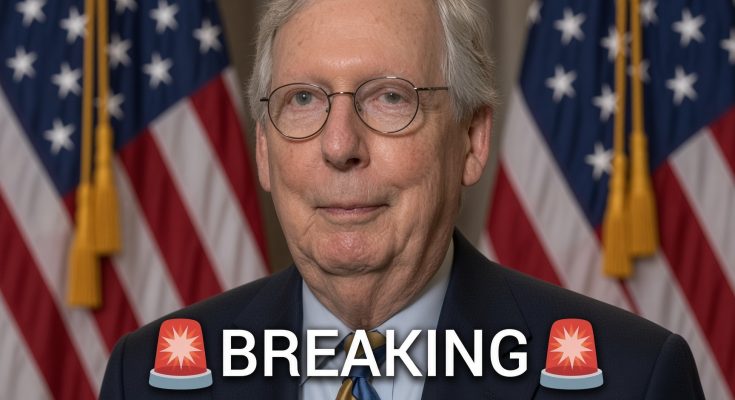
McConnell, 84, was last seen publicly on June 6, when he chaired a Senate Appropriations subcommittee hearing on President Trump’s military and defense strategy. Photographs taken two days earlier, on June 4, showed him being assisted by aides as he moved through the Capitol to cast votes on a reconciliation package—one of several recent appearances in which he required help navigating the building, including the use of a wheelchair. Those images marked the last public photographs of the senator before his hospitalization.
His office has offered only brief updates since then. In its most recent statement, issued Monday, aides said McConnell “continues to improve” and remains engaged with Senate and Kentucky-related matters while Congress is out of session. The office has not disclosed a diagnosis, confirmed reports that first responders were called to his residence for an unconscious person on the day he was hospitalized, or provided any timeline for his discharge or return to the Senate. Subsequent media reports citing emergency-dispatch audio have not been addressed by his staff.
The absence of detailed information has drawn bipartisan concern. In a July 8 letter to McConnell’s Washington office, Kentucky Gov. Andy Beshear wrote that Kentuckians had “grown increasingly concerned” about the senator’s well-being and his ability to continue serving. “Allowing speculation to continue in the media is not fair to the Senator or to Kentuckians,” Beshear said, urging McConnell’s office to provide information directly to the public. Indiana Rep. Marlin Stutzman raised similar points in a Thursday interview with NewsNation, noting that he had not heard from McConnell and arguing that constituents and Republican colleagues alike deserve more clarity. “I think it’s a question that Republicans should be asking because he does represent the state of Kentucky,” Stutzman said.
McConnell’s current hospitalization follows a series of health challenges that have drawn increasing attention in recent years. In March 2023, he suffered a concussion and fractured a rib after falling at a dinner event in Washington, keeping him sidelined for more than five weeks. Later that year, he experienced two widely publicized episodes in which he briefly froze while speaking to reporters; his office attributed the second incident to lightheadedness after medical evaluation. Additional falls and injuries in 2024, combined with the lingering effects of childhood polio that have led to greater reliance on a wheelchair, further heightened scrutiny. Earlier this year, he was briefly hospitalized after developing flu-like symptoms before returning to work.
In February, McConnell announced that he would not seek another term, ending a Senate career that spans four decades when his current term concludes in January. The decision came amid ongoing questions about his health and mobility, though his office has consistently described him as improving and able to fulfill his duties from the hospital. For now, those limited assurances have not satisfied lawmakers and constituents seeking clearer answers about his condition, his expected recovery, or whether he will resume public activities before the end of his term. His office has not indicated when further updates might be forthcoming.